
The affectionate, playful, and loving nature of a Miniature Poodle can fill your home with happiness for many, many years to come. The typical Miniature Poodle lifespan is 10 to 18 years, but most dogs live 12 to 15 years. Although they tend to live longer than most dogs, they do have some health issues that can greatly shorten their lives.
This doesn’t imply all Miniature Poodles are affected by these issues. They may be at risk for some health problems, but that's not a diagnosis. Miniature Poodles can live long, healthy lives when you care for them with love, maintain a healthy body condition, and schedule regular vet checkups.
This guide highlights the most common Miniature Poodle health concerns, the symptoms, and screening tests that good breeders should perform. It also includes everyday aspects that can improve your dog’s quality of life in their puppy, adult, and senior years.
Key Takeaways
- ●The Miniature Poodle is a healthy, long-lived dog with an average lifespan of 10 to 18 years.
- ●They may have an inherited or age-related disease predisposition, such as dental disease, patellar luxation, progressive retinal atrophy, and hormonal disorders.
- ●Responsible breeding and health testing control the genetic risk, but are only part of the solution and can’t rule out all health issues.
- ●Daily care does make a difference. Nutritious food, exercise, oral hygiene, grooming, and regular veterinary checkups all contribute to good health throughout their life.
- ●Know the signs and take action early. Early veterinary attention can help your Miniature Poodle live longer and healthier.

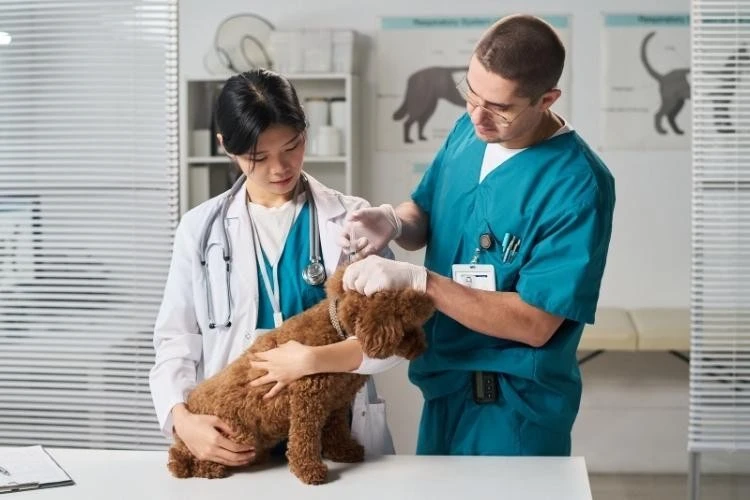
Image by Africa Images on Canva
What's the Miniature Poodle Life Expectancy?
Average Miniature Poodle lifespan
Several veterinary studies support the breed's reputation for living a long life. According to the American Kennel Club (AKC), the Miniature Poodle lifespan range is approximately 10 to 18 years. A study by Adams et al. (2010) summarizing breed-by-breed data also found the mean Miniature Poodle life expectancy to be 13.92 years, which falls within the typical estimate of 12 to 15 years.
Another VetCompass study by O'Neill et al. (2013) analyzed over 100,000 dogs, and listed Miniature Poodles as one of the breeds with the longest lifespan. The study reported a median age at death of 14.2 years for Miniature Poodles.
These studies confirm that Miniature Poodles tend to have longer lifespans than larger breeds. However, lifespan doesn't depend on Miniature Poodle size alone. Other factors like genetics, injuries, long-term disease, and the quality of care can affect your pup's longevity.
Lifespan At a Glance
- ●Broad Expected Range: 10 to18 years
- ●Puppy Stage: Growth, socialization, vaccination, and safe exercise.
- ●Adult Stage: Weight management, dental care, activity, and routine screening.
- ●Senior Stage: Closer monitoring of mobility, vision, heart health, and behavior.
- ●Care Factors to Consider: Food, body condition, dental hygiene, activity, and preventive veterinary care.
Other Factors Influencing How Long a Miniature Poodle Lives
Several factors influence how long a Miniature Poodle lives. While genetics play an important role, the care you provide throughout your dog's life also affects their overall health and quality of life.
- ●Genetics: Inherited traits influence the risk of certain breed-associated hereditary conditions.
- ●Responsible Breeding: Health screening helps responsible breeders reduce the risk of passing on some inherited diseases, although no DNA test or breeding program can guarantee perfect health.
- ●Balanced Nutrition: Feed a complete and balanced diet that's appropriate for your Miniature Poodle's age and life stage.
- ●Regular Exercise: Maintain a healthy body condition with daily physical activity and mental enrichment.
- ●Dental Care: Brush your dog's teeth regularly and schedule professional dental care when your vet recommends it.
- ●Preventive Veterinary Care: Follow your vet's guidance for vaccinations, parasite prevention, and routine health checkups.
- ●Early Detection: Book a veterinary appointment if you notice a new lump, persistent cough, limping, appetite changes, increased thirst, or other unusual symptoms.
- ●Home Safety: Reduce the risk of accidents by keeping your home and garden safe and protecting your dog from common hazards.
If you're considering bringing a Miniature Poodle home, start with a healthy, well-bred puppy. At HonestPet, we can connect you with well-socialized and healthy Miniature Poodle puppies from trusted breeders who adhere to our strict ethical standards. Each puppy comes vet-checked and vaccinated, with a health guarantee, 30 days of pet insurance coverage, and ongoing training support.
Image by RyanKing999 from Getty Images on Canva
Miniature Poodle Health Concerns: What You Should Know
Miniature and Toy Poodles are generally healthy, athletic dogs. However, their genetic background, small size, age, and anatomy make them more vulnerable to certain health issues.
A Predisposition Isn't a Diagnosis
A predisposition means a disease or physical problem appears more frequently within a breed or family line. It doesn’t mean your Mini Poodle must develop these health concerns.
While Mini Poodles can inherit some conditions from their parents, others develop through a combination of factors, such as age, weight, environment, and chance. This is why health testing at the vet can help identify certain risks early before they become life-threatening.
Mini Poodle health issues also may not apply to other Poodles or mixed-breed dogs. A Cavapoo, Mini Goldendoodle, French Poodle, or any other Mini Poodle crossbreed can inherit characteristics from either side of the family. Therefore, you can't use purebred Miniature Poodle health problems to forecast the health of an individual mixed-breed dog.
Signs that Deserve Veterinary Attention
| Sign | Possible Concern | Response |
|---|---|---|
| Repeated skipping, limping, or holding up a hind leg | Patellar luxation or another joint injury. | Arrange for a vet assessment. |
| Hesitation in dim light or bumping into objects | Progressive retinal atrophy, cataracts, or another eye disorder. | Book an eye examination appointment. |
| Excessive thirst and urination | Hormonal, kidney, or metabolic disease. | Contact your vet immediately. |
| Coughing, weakness, breathing difficulty, or collapse | Heart or respiratory problem | Seek urgent veterinary advice. |
| Persistent bad breath, red gums, or difficulty eating | Dental or periodontal disease | Schedule dental care. |
| Vomiting with marked weakness or collapse | Addisonian crisis or another emergency | Seek emergency care. |
Remember that these signs don’t confirm a particular disease. Several conditions can cause similar symptoms, so take your pup to the vet for an examination and recommendations for tests.

Image by Thomasmales from Getty Images on Canva
Common Miniature Poodle Health Problems
These are the health conditions most commonly associated with Miniature Poodles. Understanding them helps you recognize potential warning signs and seek veterinary care sooner.
Dental Disease and Gum Problems
According to Dr. Jan Bellows (Past President, American Veterinary Dental College), periodontal disease is the biggest dental problem for small dogs, and by age 12, Toy breeds often have only half their teeth remaining (Gewirtz, 2024).
Crowded teeth add odd angles that trap food and accelerate plaque and tartar buildup. These areas support bacterial plaque growth, which increases the risk of infections under the gumline. Untreated plaque can harden into tartar, allowing inflammation (gingivitis) and infection to affect the tissues supporting the teeth. This more advanced condition is called periodontal disease.
Watch for persistent bad breath, red or bleeding gums, visible tartar, dropping food, chewing on one side, pawing at the mouth, or reluctance to eat. Dental pain isn’t always obvious, and many dogs can hide pain and continue eating in discomfort.
Brush your Poodle’s teeth with dog-safe toothpaste, ideally every day once they’re comfortable with the routine. The vet can assess your dog's mouth and advise when they need professional dental cleaning.
Patellar Luxation and Other Joint Concerns
Patellar luxation occurs when the kneecap slips out of its normal groove. It's common in many small dog breeds, including Miniature Poodles. Signs include skipping for several steps, briefly carrying a hind leg, limping intermittently, becoming stiff, or avoiding jumping (O'Neill et al., 2016).
Mild cases may only need monitoring, while dogs with persistent pain or structural damage may need medication, activity changes, or surgery. Keep your dog at a healthy weight to reduce unnecessary pressure on the joints. However, weight management can't correct an inherited structural problem.
Hip Dysplasia
Although hip dysplasia is often associated with larger dogs such as Standard Poodles, Mini Poodles can also develop hip dysplasia when the hip joint forms abnormally, creating looseness between the thigh bone and hip socket. Over time, this can cause pain and arthritis.
Signs of hip dysplasia include stiffness, reduced activity, difficulty rising, reluctance to climb stairs, or a “bunny-hopping” gait (Baldinger et al., 2020). So, before bringing a Mini Poodle home, ensure that hip evaluation is included in the breeder’s screening.
Legg-Calve-Perthes Disease
Legg-Calve-Perthes disease is another health concern for Mini Poodles, affecting the head of the femur (thigh bone) where it meets the hip. Reduced or interrupted blood supply to the head of the femur weakens the bone tissue, and over time the affected bone may collapse or lose its normal shape (Aguado & Goyenvalle, 2021). This results in pain and reduced hip joint function.
The condition usually appears in young small-breed dogs. Pain, progressive limping, muscle loss, and reluctance to bear weight are common signs. Treatment depends on severity and may include pain management or surgery.
Progressive Retinal Atrophy and Other Eye Problems
Progressive retinal atrophy (PRA) is a group of inherited diseases that gradually damage the retina. Early signs include difficulty seeing in dim light, increased caution on stairs, or reluctance to move through an unfamiliar room (Poodle Club of America, 2020). Vision usually worsens over time and may progress to blindness.
Cataracts can also reduce vision and may give the eye a cloudy appearance, but cataracts and PRA are different conditions. A veterinary ophthalmologist can investigate eye changes and determine which problem may be present.
According to the Poodle Club of America (PCA), a DNA test is available for PRA-prcd, a mutation associated with progressive retinal atrophy in Toy and Miniature Poodles. Responsible screening also includes an eye examination by a veterinary ophthalmologist.
Even with reduced vision, your dog can still enjoy a happy, active life. Keep furniture in predictable positions, block access to hazards, use scent and verbal cues, and guide your dog calmly through new environments.
Addison’s Disease, Cushing’s Disease, and Hypothyroidism
These are hormonal diseases that can produce vague symptoms that overlap with many other illnesses. This is why you need veterinary blood tests and other diagnostic procedures to tell the difference.
Addison’s Disease
Miniature Poodles can suffer from Addison’s disease when the adrenal glands don’t produce enough cortisol and aldosterone to regulate the dog’s body. Common early signs may include vomiting, poor appetite, weight loss, diarrhea, weakness, shaking, or lethargy (Bugbee et al., 2023). Symptoms may disappear and return, which can delay diagnosis. Watch out for severe weakness or collapse, as they may indicate an Addisonian crisis, which requires emergency treatment.
If your dog is diagnosed with Addison’s Disease, don't panic. Mini Poodles often live well with lifelong medication and regular monitoring.
Cushing’s Disease
According to Bugbee et al. (2023), in the Journal of the American Animal Hospital Association, Cushing’s disease, or hyperadrenocorticism, involves excessive cortisol. You may notice increased thirst, frequent urination, a larger appetite, panting, muscle weakness, a pot-bellied appearance, or coat and skin changes.
Other diseases can cause the same signs. This is why you need a vet to perform appropriate tests before recommending treatment.
Hypothyroidism
Mini Poodles can also develop hypothyroidism when the thyroid gland produces too little thyroid hormone. Common symptoms include lethargy, unexplained weight gain, recurrent skin problems, hair loss, coat changes, or increased shedding (Bugbee et al., 2023).
Hypothyroidism can only be diagnosed through veterinary blood testing. Your vet must confirm the diagnosis and recommend daily medication or follow-up tests.
Mitral Valve Disease
As your Poodle ages, degenerative mitral valve disease, which affects a valve on the left side of the heart, becomes another health concern. A study by Falk et al. (2019) in the Journal of Veterinary Cardiology found that mitral valve disease affects Miniature Poodles over 8 years old.
Some dogs initially show no outward symptoms, and most vets detect the problem after hearing a heart murmur. As the disease progresses, common symptoms may include coughing, reduced stamina, weakness, rapid or difficult breathing, or collapse (Falk et al., 2019).
However, a murmur doesn’t automatically mean heart failure. Your vet may recommend imaging, monitoring, or medication based on the stage of the disease.
Ear, Skin, and Coat Concerns
The AKC warns that the Miniature Poodle’s coat of soft, defined curls needs consistent care. Curly fur around the ear opening and hair within the canal can reduce airflow, which is why routine veterinary checkups are very important.
Contact your vet if you notice odor, redness, discharge, head shaking, scratching, or pain around the ears. Don’t push cotton swabs or cleaning tools deep into the canal. Allergies may contribute to repeated ear and skin problems, so recurring symptoms should be assessed by a veterinary professional.

Image by DragonImages on Canva
How Daily Care Can Support a Mini Poodle’s Health
While daily care can't eliminate genetic or age-related risk, it supports healthy development, protects quality of life, and helps you notice changes sooner. Here are some of the daily care needs for Miniature Poodles:
Food and Healthy Weight
Choose high-quality dog food that is complete, balanced, and suitable for your dog’s life stage. In the US, check the label for a nutritional adequacy statement from the Association of American Feed Control Officials (AAFCO). The association set nutritional standards for dogs.
For instance, Miniature Poodle puppies should eat measured meals 3 to 4 times a day until they're 6 months old. Follow the breeder’s transition plan and ask your vet when to adjust meal frequency. Most healthy adults eat two measured meals daily.
Treats count too in your dog's daily calories. Extra weight places more stress on the knees, hips, spine, and heart, so monitor body condition rather than relying on the scale alone. You should be able to feel the ribs without pressing hard and see a defined waist from above.
Ask your vet to calculate an individual calorie target, particularly after neutering or when your dog develops a medical condition.
Exercise and Mental Stimulation
Typically, Miniature Poodles need 1 to 1.5 hours of daily activity, divided into manageable sessions. This isn’t a fixed prescription. Consider your dog's age, temperature, fitness, and health to determine how much exercise is appropriate for them.
Mix long walks with sniffing time, games, safe swimming, and controlled canine sports. Miniature Poodles descend from skilled water-retrieving hunting dogs, so they enjoy carrying toys and completing scent-based tasks.
Mental stimulation matters as much as physical movement. Mini Poodles are smart, fast learners and often enjoy food puzzles, short obedience training sessions, scent games, and learning new cues. Read our guide on the Miniature Poodle personality for more tips on the most suitable enrichment activities for this breed.
Don't do repetitive high-impact jumping with a growing puppy. The popular “five minutes per month of age” rule isn’t a scientifically fixed limit. Ask your vet about safe activity for your puppy’s size, growth, and health.
Coat Care, Ears, and Skin
Miniature Poodles shed very little, but loose hair becomes trapped within the coat. Without regular grooming, loose hair can form painful mats close to the skin.
You'll need to brush them using a slicker brush and comb, paying attention to the ears, armpits, collar area, legs, and tail. Daily brushing is required to prevent matting in their coat. Fluffy styles may need daily brushing. You can also choose a short clip, which requires less coat care and dries more quickly after a bath. Hair around their eyes also needs clipping for clear vision.
Most Miniature Poodles need professional grooming every four to six weeks. The exact schedule depends on coat length, lifestyle, and preferred clip. Bathe your Mini Poodle once a month using a dog-safe shampoo, then dry and check the ears.
Brushing your dog removes debris and distributes natural oils, but it can't treat allergies, infection, or an underlying skin disease. Visit the vet if your dog has any of these issues.
Veterinary and Dental Routine
Schedule wellness visits based on your dog’s life stage and medical history. Follow your vet’s recommendations for vaccination, parasite prevention, dental care, and screening.
Brush your dog's teeth frequently, examine the skin during grooming, and note changes in appetite, thirst, movement, breathing, or behavior. Seek prompt advice about new lumps, persistent coughing, limping, unexplained weight loss, or difficulty eating.
If you're a new Mini Poodle puppy owner, our new-puppy quick start guide and the comprehensive tips and tricks for raising a new puppy cover essentials like health, nutrition, potty training, and how to handle play biting, which can help you prepare for your puppy’s first days home.
Health Screening and Responsible Miniature Poodle Breeders
Responsible breeding can't eliminate every health risk. However, transparent screening can reduce uncertainty and help breeders make informed decisions about which dogs they should breed to produce a healthy litter.
Recommended Miniature Poodle Parent-Dog Tests
The Poodle Club of America and AKC list four principal health checks for Miniature Poodle breeding stock:
- ●Patella evaluation
- ●Hip evaluation
- ●Eye examination by a veterinary ophthalmologist
- ●PRA-prcd DNA test
Ask to see the sire’s and dam’s documented results rather than accepting a general claim that they have been “health tested.” Check which organization or laboratory recorded each result.
A DNA test can identify a genetic variant or carrier status, but it doesn’t necessarily show that a dog currently has the disease. In some inheritance patterns, a healthy carrier can be bred responsibly to a clear dog when the breeder understands the genetics and tests the resulting puppies appropriately.
What to Request Before Bringing a Puppy Home
Before you bring your Mini Poodle home, ask for the following:
- ●Veterinary and vaccination records
- ●Deworming history
- ●Microchip information
- ●Parent health-testing documentation
- ●Written health-guarantee terms
- ●The puppy’s current food and feeding routine
- ●Details of any medication or care needs
- ●Breeder contact information and post-placement support
Before your puppy comes home, ask for clear health records, documented parent screening, and written support details. Choose reputable platforms with responsible breeder verification, transparent information, and compassionate guidance for families.
How to Help Miniature Poodles Stay Comfortable as They Age
Discuss Any Changes with Your Vet
Aging affects every dog differently. Ask your vet about any changes, such as reduced stamina, stiffness, difficulty using stairs, a new cough, or changes in vision and hearing.
Weight gain, weight loss, increased thirst, frequent urination, disturbed sleep, house-training accidents, dental pain, and reduced appetite also deserve attention. Confusion, pacing, altered interactions, or new anxiety may reflect pain, sensory decline, or cognitive changes.
Small Adjustments that Can Help
Place non-slip rugs on smooth floors and use ramps or low steps beside furniture. Warm, supportive bedding can make rest more comfortable for a dog with stiff joints.
Replace long, demanding walks with several shorter outings when stamina declines. Keep furniture in predictable positions for dogs with vision loss, and continue gentle training and scent games to provide fun and mental stimulation.
Senior dogs need more frequent wellness appointments. Your vet can recommend a schedule based on age, medication, and existing health conditions.
Frequently Asked Questions
Are Miniature Poodles Generally Healthy Dogs?
Yes. Miniature Poodles are generally healthy and live long lives. While they can be predisposed to dental, joint, eye, hormonal, heart, ear, and skin conditions, including sebaceous adenitis, many enjoy healthy lives with responsible breeding, routine veterinary care, and a healthy lifestyle.
What Are the Most Common Miniature Poodle Health Problems?
Common health concerns include dental disease, patellar luxation, progressive retinal atrophy, ear infections, and hormonal disorders such as Cushing's disease. Some Miniature Poodles may also develop juvenile cataracts or a hereditary hip condition, although these are less common. Gastric dilatation is uncommon in the breed, but you should treat it as a veterinary emergency if it occurs.
What Health Tests Should Miniature Poodle Breeders Complete?
Responsible breeders should complete patella and hip evaluations, an ophthalmologist examination, and a PRA-prcd DNA test. Always ask to see documented results for both parents. Health testing helps breeders make informed decisions but can't guarantee your puppy won't inherit any hereditary condition.
When Is a Miniature Poodle Considered a Senior?
Many Miniature Poodles begin their senior years between seven and ten years of age. Regular veterinary check-ups become even more important as your dog ages because many health conditions are easier to manage when caught early. Spend time exercising and engaging your dog to support both physical and mental wellbeing.
What's the Leading Cause of Death in Miniature Poodles?
There's no single leading cause of death in Miniature Poodles. Age-related diseases, heart disease, cancer, and hormonal disorders become more common as dogs grow older and can lead to death. Regular veterinary care and early diagnosis are what help dogs and other pets live longer, healthier lives alongside their families.
Conclusion
Miniature Poodles can live many happy, playful years with their families. Broad estimates place their lifespan between 10 and 18 years, although this range can vary for an individual dog.
Despite their long lifespan, Mini Poodles may be predisposed to dental, joint, eye, hormonal, heart, ear, and skin concerns. However, responsible breeding, a healthy weight, dental hygiene, suitable exercise, regular grooming, and timely veterinary care can support your dog’s wellbeing.
Speak with your vet about symptoms or an individual care plan. If you're considering the breed, start with a healthy, well-socialized Mini Poodle puppy from HonestPet. Our health-focused process supports a healthy start with your puppy, giving you the peace of mind for years to come.
References
- ●Adams, V.J., Evans, K.M., Sampson, J., & Wood, J.L.N. (2010). "Methods and mortality results of a health survey of purebred dogs in the UK." Journal of Small Animal Practice, 51(10), 512–524.
- ●Aguado, E., & Goyenvalle, E. (2021). Legg-Calvé-Perthes disease in the dog. Morphologie, 105(349), 143–147.
- ●Baldinger, A., Genevois, J.-P., Moissonnier, P., Barthélemy, A., Carozzo, C., Viguier, É., Cachon, T., & Clegg, S. (2020). Prevalence of canine hip dysplasia in 10 breeds in France, a retrospective study of the 1997–2017 radiographic screening period. PLOS ONE, 15(7), e0235847.
- ●Bugbee, A., Rucinsky, R., Cazabon, S., Kvitko-White, H., Lathan, P., Nichelason, A., & Rudolph, L. (2023). 2023 AAHA selected endocrinopathies of dogs and cats guidelines. Journal of the American Animal Hospital Association, 59(3), 1–23.
- ●Falk, T., et al. (2019). Myxomatous mitral valve disease in the miniature poodle: A retrospective study. Journal of Veterinary Cardiology.
- ●Gewirtz, E. W. (2024, April 3). Do small dogs have more dental problems than large dogs? American Kennel Club.
- ●O'Neill, D.G. et al. (2013). "Longevity and mortality of owned dogs in England." The Veterinary Journal, 198(3), 638-643.
- ●O'Neill, D. G., Meeson, R. L., Sheridan, A., Church, D. B., & Brodbelt, D. C. (2016). The epidemiology of patellar luxation in dogs attending primary-care veterinary practices in England. Canine Genetics and Epidemiology, 3, Article 4.
- ●Poodle Club of America Foundation. (2020). Health testing in poodles [PDF]. Poodle Club of America.
Ready to Get Started?
Find your perfect puppy and start your journey today!